By Lisa Walshe
Looking back at life often brings understanding. As I look back at my life as a mother, I have more questions than answers. I don’t really know what made me mother the way I did, and I know at the time it often seemed I was swimming against the stream. However, I felt there was no other way to approach it.
Researching Parenting Approaches
It was 1981. I was living in Melbourne, Australia, and expecting my first child. My husband and I had moved back to Australia the year before. I had met my husband while he was flying to Sydney, and he was living in Papua, New Guinea. I followed him to New Guinea for six months before he decided it was no place for a young wife – just 21 at the time – and we returned to suburbia in Melbourne. Within months of being settled in a home of our own, I felt a huge need to have a baby. I was always into researching and set about finding out all I could about having babies and raising them. It was hard to find much information – sadly, no internet then – and even harder to find any books I agreed with.
Even then, I had some ideas on how it should be. Attachment Parenting (AP) had not been heard of in Australia at that time – not sure it was being talked about anywhere. Having been briefly in New Guinea, I was aware of how simple life with a baby could be if they were breastfed and being carried in some way. Even the poorest children seemed happy. It was actually illegal to sell formula in New Guinea without a prescription! This had been introduced by the World Health Organization to save the babies’ lives from a suspect water supply.
Beginning with Breastfeeding
I knew I wanted to breastfeed. I had suffered from terrible allergies as a child, and in order to reduce the chance that my child would develop allergies, I wanted to breastfeed for at least six months and hopefully longer. My mother had only breastfed me for the then-prescribed three months, and whether or not this was the cause of my allergies, I believe it may have contributed.
Armed with my well-read Nursing Mother’s Handbook and a will to succeed, I set off to hospital full of hope and expectation.
Nothing really went as planned with the birth, and once I had a healthy little boy, Guy, in my arms, I found that although the hospital was encouraging breastfeeding, it was by no means really supporting what my was told to me in the book. I found that although rooming-in was allowed, babies were whisked away if any sign of problems occurred and given complimentary formula feeds to settle them down. The nurses were much more concerned with the welfare of the new moms than the babies. I became obsessed with keeping Guy with me, only leaving for a shower if my husband was there. I escaped the hospital as quickly as I could – five days back then!
Once home, I felt free to do what felt right: I put him in our bed and relaxed. Our son was thriving; he hardly slept and fed almost continually! Feeding was a challenge, as Guy decided that he would only feed from one breast at a time, and for the first few weeks, he sucked so hard that he created blisters and one breast was constantly engorged and leaking. I was constantly feeding: He would sleep for 30-minute intervals and would feed again. I just accepted this, and we slept together – when we could.
Choosing to Co-Sleep
Co-sleeping was not considered a good idea. People in those days said it was unhealthy and the child would not get over it. Also, husbands were supposed to be threatened by a baby in the marital bed; my obstetrician warned me it would break up the marriage. So, I just did not tell anyone I was doing it. The baby health nurse was of the old school and told me to put my baby into a cot and let him cry, that he would soon learn!
This nurse also suggested, at six weeks, that I should give him orange juice. When I asked why – after all, he was putting on a pound a week and was happy – she just said that is what we do! I ignored her and found another community nurse.
My husband was often flying at night, so he did not really care how I managed, so long as I did. And when he was there and sleeping in the day, my husband was happy when Guy and I would join him for naps. The rest of the time, I found that the easiest way to cope was to wear Guy in a sling. All was peaceful. If my husband came home at 4 a.m. and found a baby to play with, this pleased them both.
Other mothers around me adhered to schedules, and their babies must have read the right books, as they slept much more than mine did! Or maybe they just kept up the story to be good moms?
Encouragement from an Unlikely Source
The next year, we moved to Houston and found that people there were even more hostile about nursing babies. Most mothers nursed briefly, if at all. The fact that Guy was nearing his first birthday and still happily nursing I kept to myself. I was even told by some mothers that it was indecent to nurse babies of that age! I did not even bother to tell the doctor until Guy got pneumonia and I managed to nurse him though the whole thing, saving a trip to the hospital and an I.V. drip. The doctor said I probably saved his life!
That doctor gave me some good advice, saying: “A mother knows her child better than anyone, and if the doctor does not understand that, find another doctor!”
I nursed Guy until his second birthday, when one day, I suggested that big boys do not nurse and he promptly stopped. I was shocked and a little sad.
Guy continued to sleep with us most of the time until after his fifth birthday when his little brother arrived. In his first five years of life, we moved six times and lived in three different countries. I am not sure he would have coped with all the moves and changes to his life without the security of sleeping with his parents. He was, by this stage, an extremely sensitive, mature, and intelligent child! He had been high need and would continue to be for many years, but he was a delight to know and be with.
The Beginning of a Cultural Shift, Sort of
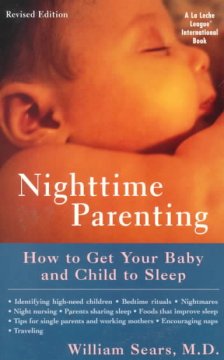
During my pregnancy with my second son, Dean, I found a book by Dr. William Sears, Nighttime Parenting. Finally, someone who agreed with what I had done instinctively.
This time, I was having our son in Brisbane, Australia. Everything had changed! Suddenly, my ideas were greeted with support, and I was considered an enlightened mother. Wow, it felt good to be appreciated and even better not to have to hide my beliefs.
My husband was now working in Hong Kong, and two weeks after Dean’s birth, I flew to Hong Kong with the baby and a five-year-old. Hong Kong, it turned out, was not at all friendly toward breastfeeding. The first few days there, I went to a doctor for the beginning stages of mastitis. This doctor was embarrassed by my condition, refused to look at my breasts and prescribed me Valium – even though I had explained I was nursing!
Very few mothers in Hong Kong nursed babies. There was a small group of La Leche League mothers, but they lived in another part of the country. Everyone around me bottlefed. Breastfeeding women were removed from restaurants, and there were no mothers’ rooms available anywhere.
Once again, I was back in an environment where what I was doing was considered all wrong. At least, this time, I had a book that agreed with me. If only we had had the internet back then…back when fax machines were new.
Unashamed AP
I did not really care what anyone thought. I was exhausted and prepared to do whatever I needed to do for my survival. I was lucky to find a doctor who agreed with my ideas – sadly most did not. Dean happily slept with us and fed nearly all night for more than two years.
Today, my husband and I have been married for 29 years, and we are enjoying being a couple again, although when the time comes, we would love to be involved and supportive grandparents. I am always hoping that young parents will choose to experience the joys of what is now commonly referred to as AP.
I spend my time giving young pregnant women lots of good information from my experience and through books I have collected on birth, breastfeeding, and parenting in general. There is so much more information available today, so many more studies and experts proclaiming the benefits of all that I instinctively knew was right. I like to think it is easier for mothers to follow their instincts these days, but there are so many other pressures competing for their time that I know that AP is just as big a challenge as it was in my day.
Attachment Parenting had not been heard of in Australia at that time – not sure it was being talked about anywhere. Having been briefly in New Guinea, I was aware of how simple life with a baby could be if they were breastfed and being carried in some way. Even the poorest children seemed happy.
I LOVE this article!! I can relate to your feelings and knowledge of what is best for your child. I am a first time mom who loves wearing my son and keeping him with me, co-sleeping, etc… and find that, even in a large city where there is more awareness of AP, etc… I still get people who do NOT understand and are critical. Your sharing really encouraged me! Thank you!
Elizabeth
Wonderful article! I keep hoping to find a like-minded friend to share & support each other with AP, but at least I’m glad my husband is with me 100% on it.
I live in NYC and some people (mainly my sister-in-laws) love to roll their eyes when I say I am still breastfeeding. Luckily I also have many friend who say, “good for you”!
forgot to mention my dd is 20mos old!
I have 2 grandchildren both aged 2…one is cosleeping (well sort of…father has been ordered to sleep in another room now) and breastfeeding, the other was bottle fed and has always slept in a crib. It is awful to have a preference but the breastfed grandchild whines, always wants mommy and the breast, does not go to bed until ‘mommy does’, seems to just cry most of the time. The other grandchild is ‘independant’, plays on his own, always smiling and seems far more advanced.
I am a baby boomer and we are the largest generation and most of us were ‘bottle fed’, and slept in cribs. Our health has been exceptional, most of us were rarely ill, we excelled mentally and knew how to have good work ethics. Yet, by reading all, we should not have reached any of those stages as we were not ‘breast fed’.
Breast feeding I feel is a mother’s way to ‘control’ a child and it is NOT for the baby – after the age of one – it is for the mother. Selfish mothers will not have independant, self thinking children. Very sad for that generation!
Lyn, what do you think mothers did a few hundred years ago when there was no such thing as bottles or cribs? How can anyone say breastfeeding is wrong when it is the most natural thing a mothe can do! And as for my four month old, she is the only baby out of all my friends and family that does not cry or whine ever. She only cries if I’m late at feeding her which is normal. She is well behaved and actually cries less than my bottle fed two year old niece.
It is amazing that people are so negative about the most natural things for a woman. I am breastfeeding exclusively and I have her in her crib most nights but some nights she won’t lay alone and that’s fine. she loves mommy and that’s how it should be.
And for the record my breastfed baby has shown many signs of being very advanced for her age and much stronger than other babies her age. She also fought off a cold with only a runny nose when the two year old she got it from was very I’ll with shivers and a 106•F fever. It has benefits and has been proven to be better for health. And a much better chance against adulthood obesity.
I am only twenty years old but I feel like my whole generation is lazy about their children, and that is really quite sad. I feel bad for babies who are raised to cry it out =(
I’m practicing AP with my 1 year old. Initially, I just followed my instincts, but within about six weeks of his life, while learning to wear him in a sling, I found a website that gave additional carrying positions. Awesome! Clicking through some links on the benefits, I found The Natural Child Project, and through them, API’s site. I know what I’m doing is right, and my son has been advanced or on target for all of his milestones. He’s healthy and happy and still nursing.
Last week a problem arose, and I called his dad for help. Now, due to a misunderstanding, I’ve got CPS telling me I’m a danger to my child, my visits with him are to be supervised, they were completely irreverent about our nursing relationship even placing my milk supply in jeopardy, and my son now stays with his father, who is NOT practicing AP, nor even attempting to continue the skills I’ve been helping my son build (baby signs, etc).
Does anyone have any resources for me? Any suggestions? I’m fighting the law (CPS jumped all over the fact that cosleeping s illegal in TX), not just culture, as the author had to do. It is terrifying!
thanks for sharing your story! it always feels nice to know i am not alone in co sleeping and breastfeeding my daughter who is 19 mos.
Hi Lyn,
I was wondering if you could elaborate a bit better on both of your grand children. Perhaps the breast fed child’s mother is not eating adequate nutrients? That could be one reason for the fussiness and clinginess — clinginess as a way of feeding more to obtain adequate nutrients. I have experienced these “symptoms” briefly with all three of my breast fed babies (eldest at superior intelligence level, all are advanced since birth); all having required an adjustment in dietary habits, e.g. cut out more sugar, drop the refined wheat products, increase good fatty fare — you get the gist.
You see, when you say things such as, “…awful to have a preference, but the breastfed child whines…seems to just cry most of the time”, it does not really say much of anything substantial and doesn’t make a good argument.
I have to argue the contrary and affirm the numerous benefits of breast feeding. If I stop too early with my 17-mo-old son, he does whimper, but that only means that he wasn’t finished feeding. He’s never been fed breast milk/formula via a bottle (with the exception of just minutes following his birth), and has yet to eat solids with a few minor exceptions since the age of seven months. Still, he breast feeds full time, around the clock as we also co-sleep (as I would shout from the hilltops — who really cares what others think abou that anyway?). Sometimes he feeds every two hours, but most times he feeds every hour to hour and a half. I am a light weight and so is he; and at 30 lbs, he’s as energetic, robust, daring, happy, and intelligent as most breast fed toddlers I’ve found to be.
On the flip, formula fed babies I’ve seen have a peculiar cottage-cheesy fatty under layer to their bodies. I am not certain if it’s just a coincidence that I have found this, or if there is some completely unrelated, logical explanation for this appearance, but none of my three kids had this. My son is slim, long, well proportioned, skin is velvety smooth and even in color/tone, eyes are bright and clear with the whites of the eyes as white as can be.
Intelligent boy? You bet! Inquisitive and talking in two languages at 17 months. My daughter spoke in paragraphs at 18 months. She is now 17 1/2 years old — my eldest child I mentioned above completely immersed in the arts.
I would like to know the whole story surrounding your grandchildren, Lyn, as I am not entirely certain that the bottle feeding beats out the breast feeding, and suppose that there may be other reasons that would cause me to be suspicious of the breast fed child’s ceaseless crying.
I am a skeptic by nature.
— MotherNatureKnowsBest
I feel much better as a mother knowing I am not horrible for allowing my son to sleep in my bed. I really support mothers who nurse their babies. My son is almost 8 months and if it wasn’t for him stripping me lol or other woman for that matter I would nurse him longer. Mom’s remember just becasue you wean them doesn’t mean you still can’t pump and provide them the healthy nutrients of your breastmilk. I plan on pumping his second year so he can still receive that benefit.
I don’t know why folks are thinking that attachment parenting is something relatively new…….. La Leche League has been promoting these ideas for decades. My son is 35 years old and my daugher 32; we had breastfeeding on demand, family bed and lots of contact. It was a very challenging and enriching time!!! Now, as a grandmother, I am delighted to see that the grown children are doing this same type of parenting. It feels like a basic instinct, not particularly a choice, simply natural (although demanding). Hope our future generations benefit from this same concept. My blessings to all parents who give this a try.
Dear Lyn,
Firstly I would like to say that I support mothers and families no matter how they decide to feed their babies. I have quite a few friends who for some reason or another cannot breast feed and they love their children and these children thrive. BUT i do think that your comments about mothers who breast feed their children over the age of one are ‘selfish’ is not well informed. In my experience it is quite the opposite. I breast fed my first child until she was 25 months old. I tried to wean her earlier but it would of been selfish of me to do it earlier. She needed me. No matter how hard I tried she would resist weaning until it became really distressing to her and me. I decided to let her wean herself after I got advice from a maternal health nurse. As soon as I relaxed she also relaxed and did wean herself. In all that time she has been fiercely independent. She is three now and speaks beautifully, dresses herself, feeds herself, is toilet trained and is an absolute pleasure to be with!!
Your comments do not encourage or support mothers. I think more people need to judge less and support more. Please support your daughters or daughters in law in how they choose to mother their babies. It means so much to us!! My mother and mother in law never judge but are always there to support my decisions even though they mothered in a different generation and did things a lot differently to me.
Thank YOU for sharing
You inspired me
my 2nd one is 9 mon and I am still nursing
My older is seven and we coslept for 5 yrs
He is now 7 and sleeps in his own bed but shares the room with us
my baby is between us .. But we enjoy that
we have been married for 12 yrs and love each other
that is growing by each passing day
yes we crave for some time alone
but we know kids do grow fast so our focus is their nourishment
both physically and emotionally
my son is the best big brother and is so intelligent and sensible
Amen !!!!
Hi everyone,
Our daughter will be 3 in two weeks, is still breast feeding and co-sleeping with us. I have only just discovered AP – it seems the most natural way of parenting to me. Our daughter has an incredibley strong immune system is bright and intelligent as well as compassionate and showing empathy to other children – other adults say she is a delight to be with. Let’s get more of this message out there – the western world needs educating. 🙂 hannah
It is beneficial in every way! Your body made that baby, nursing your newborn is the only way to continue that Perfect nurishment. Co-sLeeping is the only way to continue that perfect physical connection and securing that bond.
When my daughter was born I instinctively breastfed and co-slept. It was great, she would feed often through the night without my getting up continuously. She felt warm and secure and safe by my side. I knew I had that bassinet by my bed for her and that is where she “should” sleep. So one night, when she was 6 weeks old, after she fell asleep I gently put her in her bassinet. Dressed in her pjs and a blanket, I went to sleep too. I woke up after a couple hours with a feeling of panic, she was not crying nor did she make a sound. I picked her up and brought close to me, she began to nurse. She felt cold, I was sad that I had let her get cold. I never did that again unTil she was 4. She nursed until she was 3 1/2 then we gradually and lovingly put her in her own bed in the same room. She has always been a confident, super healthy child with a glow that is unexplainable. I will not continue on with how my child is superior to all other babies, especially bottle fed babies. That just sounds so self-righteous, that is not nice or empithetic. Many mothers would have loved to nurse, but for some reason or another couldn’t. Knowledge is key, we must educate and comminicate with other parents, parents to-be and our children who will one day have their own children. I have not seen too many humble breastfeeding, AP moms. Get over yourselves and start reaching out!
I’m so blessed to find encourgement in this site.I cry with joy as I find others feel as I do.My little M is 23 months and nursing as well as co sleeping. She is a joy and blessing from God.I plan to nurse until she is 3years or when she decides she is ready.I learned that Hannah in the bible nursed Samuel until he was 3 years old so this is where my conviction comes from.As I was looking for divine direction. I am pleased to say that my 3 older children whom are very intellegent happy teens whom I am often told by others are respectful and have empathy for others, I nursed and co slept also. They are now 19,15 ,and 13 years old.We have a gap of 12 years then had little M. Whom is very pleased and secure in our family.I am one who also feels that society today in our culture is only seeing women as sex tools not as nourashing loving thinking careing Mothers.Start seeing nursing mothers as builders of healthyemotionally nutritionally and physically healthy children and individuals.
I’m curious as to how you maintain an intimate, adult relationship with your spouse with children sleeping in your bed for, seemingly, up to 7 years? And to then move the child into a bed in your room… surely you don’t have relations with the children in the room? I’m not trying to be contentious it just seems to me that we play many roles aside from “doting mother” and this doesn’t seem to allow much room for other roles.
I am beginning to be concerned about a dear friend of mine and I would appreciate any comments you all would have…To start with, I definitely advocate attached parenting but am wondering if there are circumstances when it can start to cross emotional boundaries. My friend is a single woman who conceived her child via a sperm donor. Her son is 4 and is still nursing at night. She rents a room in a house so they sleep together and typically shower together. She has mentioned a possibility of moving and feels that they can share a one bedroom apartment until 3rd or 4th grade. To honor his “gender identity”, she accompanies him into men’s restrooms so that he can use the urinal. She has already said to me in passing that “he fulfills her needs for intimacy”. I just feel a bit unsettled… If this all seems fine, please let me know.
Lyn,
*Mindfully* feeding your baby (breast or bottle) and tending to your child thru the night (cosleeping or crib) are ways of being attuned to your baby that serve more than creating a healthy, intelligent, independent child/adult who has a solid work ethic. Again, keyword being mindfully. It’s about gently supporting the baby/toddler as he/she goes through their emotional/psychological developments from birth to around age three (some call it a “second birth”). Please take the time to consider that while health, nutrition, and education are all important factors, creating a solid emotional attachment sets a deep foundation for one’s sense of self. Louise Kaplan’s book “Oneness and Separateness”, published in 1978, would be a wise read to understand the nuts and bolts of mindful parenting regardless of one’s specific choices. You’ll notice forcing independence through abandoning a child in any manner is not recommended.
I think this is my favourite article ever posted here. It is so heartfelt and celebratory and kind. Up until recently I had no “anti” experiences, except with my inlaws. I was really shocked to have a good friend say recently that my 2 yr old is only nursing for me and that it’s entirely for me. It was stated as if it were an insight specific to me (which is what made it shocking and untrue), rather than just an opinion on “extended” breastfeeding in general, but that’s what it was, not a reflection upon me but the expression of a deep personal conviction based on the teachings of someone whose own practitioners no longer recommend following his dictates on bf- it has nothing to do with me and my child. The mitigating circumstance also fuelling the opinion and giving it some aspect that is close to truth but not quite truth is our loss of a baby last year. My husband, who will always be honest and who has no reason to want to prolong bfing and cosleeping beyond our son’s needs, even said he felt she was wildly wrong in our son’s case. I was in shock when she said it and very troubled. His need and want is genuine and as much as I also enjoy bfing, I would do whatever he wants to do, whatever is best for him. He will wean when he wants to, to suggest that he doesn’t need or want to feed and only does it bc I exert a subconscious influence is ludicrous- dear boy even says “bubboes” in his sleep! I felt the world shrink around us when someone I have trusted implicitly created another unsafe place for parenting as my child needs and as I choose. I have never really thought about our continued breastfeeding, I have followed his cues and I will just have to shake off my reaction to my friend’s statement bc she is generally super, but it was a nice balm to read this. I did not realise until I finished reading this, how shaken I was by my friend’s assertions. It was when I read “Lynn”‘s comments on the article that I realised somebody can have an unfounded, unscientific and illogical opinion (bc anti Breastfeeding arguments can never be anything other than that) based on personal issues or beliefs and make it sound like a rational conclusion.
Thank you for providing some balm for my heart and mind.
Xxc
To Interested Observer……who says marrital relations have to take place in the bedroom 😉
My 18 month old daughter room-shares with us, we just wait until she is asleep to have a little fun. I’m pregnant, so I can attest to it’s success. As kids get older, I suppose parents have to get more creative and spontaneous with the where’s and how’s of their intimacy. Sounds more fun than doing it in bed at night every time!
Love this article! I have always known that if I ever had children, I would breast feed. I am a nurse and have always thought of how “unsafe” it is to co-sleep. With that said my son and I have slept together every night since coming home from the hospital. I will sometimes lie him down in his bed or bassinet for naps but he doesn’t sleep as well and I don’t either if I do try to nap. His Dad refuses to allow baby in our bed so we sleep in a spare bedroom. He does understand though that with breast feeding it is easier for baby and myself, and I have mostly agreed to sleep elsewhere since hubby is such a light sleeper and have done out if consideration for him. My family completely supports my decision to BF and AP, its awesome. On the other hand, hubby’s family thinks its “weird”, compares me to a dairy cow, and tell me almost daily how sick they are of seeing my boobs. The in laws I loved before baby arrived I can barely tolerate 3 months later.
Thank you. I stumbled upon this article when searching the LLLI site for other sources of information on sleep sharing. Your story makes me feel much better about my choices in parenting so far. When I’m asked are you still nursing? I get frustrated my baby girl is only eight weeks old, I feel if it’s best for her for me and for our family budget I’m willing to do it for as long as I can my goal is one year due to I will be returning to work. And people ask is she sleeping thru the night? She’s only eight weeks, really and is she sleeping in her own bed? Well no. We are cosleeping it just seems easier and less stressful for her and us. But most people around me don’t agree with any of this including how often I feed her every 2-3 hours during the day and 3-4 at night. They say, really she’s still eating every 2 hours? Why don’t you just let her cry for a little while to stretch it out? Grrr. And even though there are laws where I live in Virginia protecting breastfeeding moms to feed in public everyone wants to shut me out. They “family, friends and even strangers” suggest a bathroom, a spare bedroom, go out to the car etc. REALLY! I am discreet and always cover up, why is breastfeeding still so scary to everyone, it’s natural… I can see why a lot of mothers give it up, but I’m determined I will do what I think is right and our family will be better off because of it.
Thank you for this personal experience, it is encouraging me to keep doing what I’m doing. I have been following my instinct from the beginning with my now 7 month old. I find it easier not to tell people that he sleeps in our bed, isn’t on a schedule, that I nurse him when he bumps his head or is having trouble sleeping, and that we carry him literally everywhere we go (we’re outdoors people so he’s slept in a tent a lot). Often people comment that he’s the happiest baby they’ve known, doesn’t cry, etc. and I’ve found parenting to be very fun this way. We keep it natural and simple and couldn’t be happier, can’t wait for baby #2 someday!
It’s so encouraging to read most of the comments in this thread. I started out wanting to breastfeed for six months at least, but bought a crib. Co-sleeping hadn’t really occurred to me as an option. My daughter wasn’t keen on the crib at all. We’d put her to sleep, and the second she was put down, she’d wake and we’d have to start over. The first couple of weeks after her birth were difficult – we were up for hours every night, and constantly exhausted. She’d wake, I’d nurse her and then spend ages putting her back to sleep, only to have her wake as soon as I put her down in the crib. She also seemed to breathe irregularly, so I slept fitfully, listening for her breathing all night. One night, she was lying in her crib in our bedroom, and she gasped like she was taking her last breath. I jumped up and scooped her up, and brought her into bed with us. She’s slept there ever since. Nights instantly became easier. She stirs and I nurse her, and then she goes back to sleep. Her breathing seemed to instantly become more regular, and she’s thriving. She’s 4 months old now, and I’ve decided to continue nursing and co-sleeping until she’s at least 12 months old. I also carry her around in a wrap. It felt so unnatural having her at arm’s length in a bassinet – when she’d cry I would just pick her up anyway, and then I’d be left with an empty stroller to push around. Carrying her felt so much simpler, and she cried much less as a result. I fell into attachment parenting by instinct; it seems the most natural thing in the world, and I can’t imagine doing it any other way.